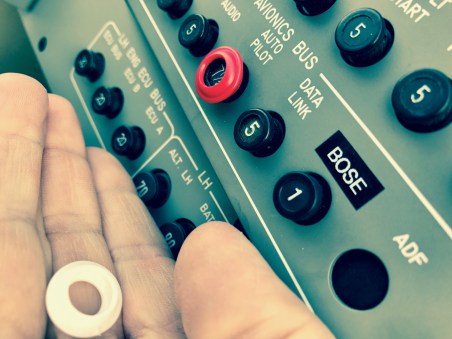
If you fly two thousand hours over eleven years you will see some equipment failures (and some pilot failures). This was the first time I had a failure and didn’t know it.
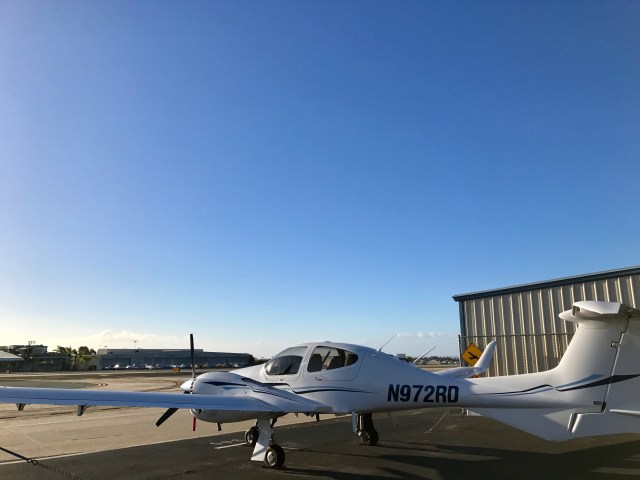
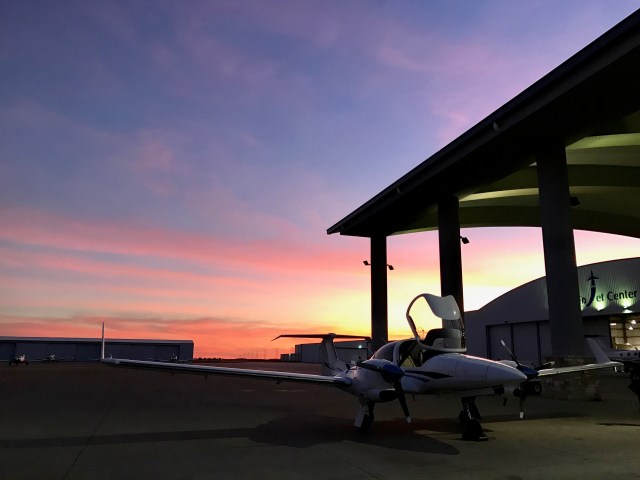
Friends who follow me on Facebook are familiar with these two pictures:
As I was flying Dexter from Santa Monica, California to New Orleans, Louisiana for SICB’s annual conference we stopped for fuel (of human and engine both) in Austin, Texas. We took off into a night sky. I could spot traffic coming off Houston’s main airport more easily and watched the passenger jets coming in from the north heading for a long downwind leg to land.
A good pilot is always scanning everything. I take photos and on long, daylight legs will read a book, but I don’t read more than a sentence or two before I glance at all the important information. My ears are tuned to the hum of the engines and when they cough or mumble I am instantly alert and double-scanning everything. More often with the twins the propellers will get out sync, with the left engine at 2090 RPMs and the right at 2100 RPMs. A little nudge on the throttle and they are back humming evenly again. But I am always checking the groundspeed, comparing to the true airspeed, the tailwinds, the estimated time en route (ETE) to our next navigation point, and then a glance to check on the passenger (snoozing). Continue reading →





 Flying Summers Brothers